

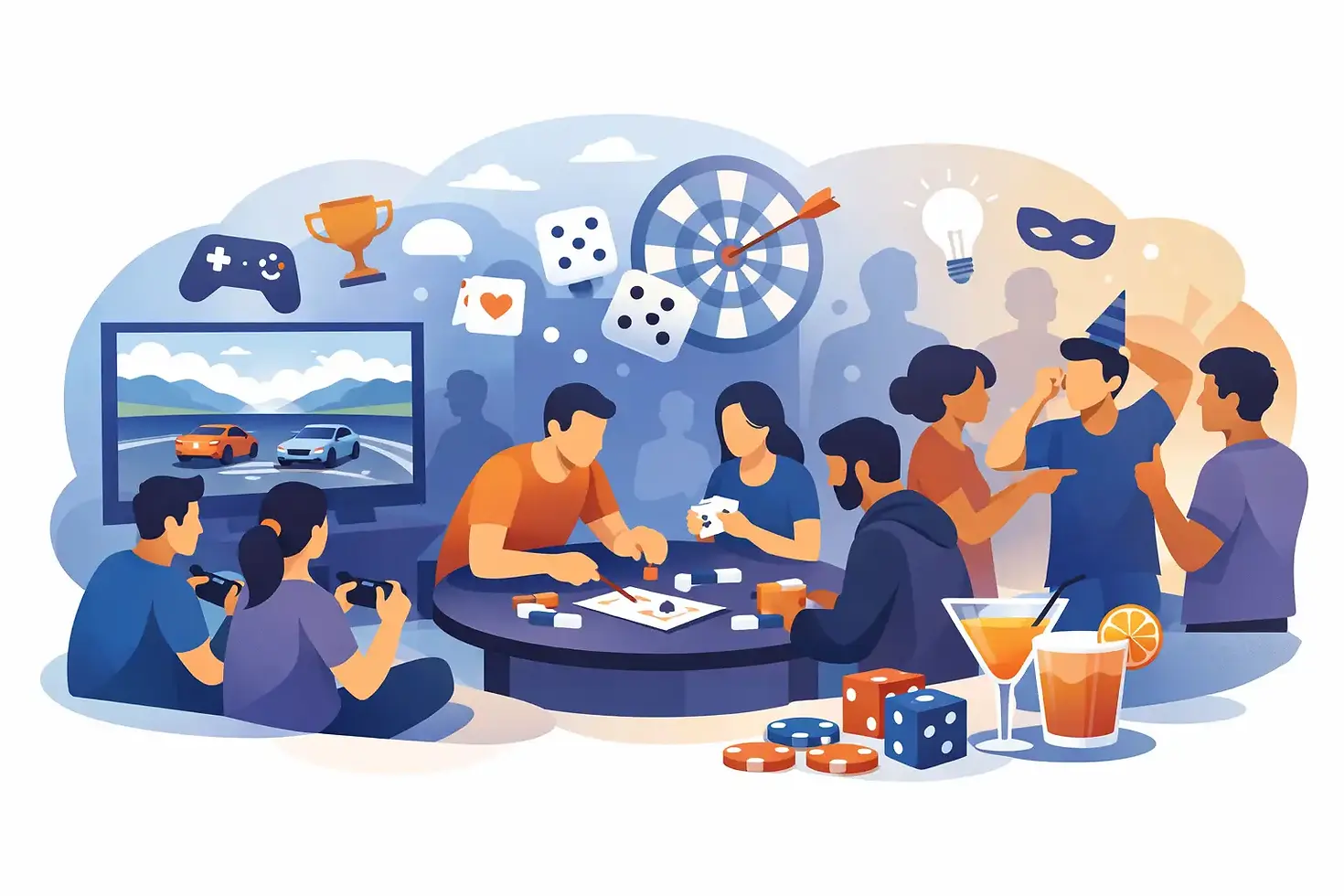
12 Best Social Gaming Night Ideas for Groups
A great gaming night is not just a few people staring at separate screens with a takeaway going cold. The best social gaming night ideas give everyone a role, create real moments of rivalry and make the group want a rematch before the night is over. Whether your crew sweats ranked matches or usually only picks up a controller at a mate’s flat, the mission is the same: get everyone playing together.
Why the Best Social Gaming Night Ideas Need a Game Plan
The difference between a forgettable session and a legendary one is usually structure. You do not need to schedule every minute like an esports event, but you do need a clear starting point. Pick a main game or challenge, decide how many people are playing at once, and make sure anyone waiting has something to do other than scroll on their mobile phone.
The strongest social gaming nights mix high-energy competition with lighter rounds. A tense football final or fighter bracket can be brilliant for the competitive players, but a co-op mission, party game or quick racing challenge stops quieter guests from being left on the sidelines. Think of it as building a squad, not just filling a sofa.
Private space matters too. At home, someone is always asking you to keep it down, the Wi-Fi decides it has other plans, or the screen is too small for six people to see what is happening. A dedicated gaming room gives the night a proper launch point. It feels like an occasion from the minute your group walks in.
12 Best Social Gaming Night Ideas for Your Squad
1. Build a mini tournament
A tournament is the cleanest way to turn a casual hangout into an event. Choose a game your group already understands, set up a simple knockout bracket and play short rounds so the pace never drops. Football games, fighting games, racers and sports titles are all strong picks because each match has a clear winner and no one has to wait an hour for their turn.
Keep the prize silly but worth chasing. The winner might get first choice of snacks, bragging rights for the group chat, or the power to choose the next game. If skills in the group are wildly different, use a handicap system or team up stronger players with newcomers. Fairer rounds mean more laughs and fewer early rage-quits.
2. Run a co-op campaign mission
Competitive games bring the noise, but co-op games bring the stories. Pick a game with a clear shared objective and give yourselves a mission: complete one difficult level, escape a horror scenario, survive a set number of rounds or beat a boss before time runs out.
This works especially well when friends have different ability levels. One player can take charge of strategy, another can be the chaotic wildcard, and someone who is not usually a gamer can still be the hero who revives the team at the right moment. The point is not a perfect run. It is the inevitable disaster that your group will still be talking about next week.
3. Host a racing night with rotation rules
Racing games are social gold because the controls are quick to learn and every race tells its own story. Set a rule that the winner stays in for one race only, then hands over the controller. That keeps the queue moving and lets more people get involved without turning the evening into a one-person victory lap.
Add themed cups to make it feel bigger: city circuits, off-road chaos, night racing or a no-assists challenge for the brave. For an extra twist, let the last-place finisher choose the next track. It adds a tiny bit of revenge power and makes every position on the leaderboard matter.
4. Try a party-game decider round
Not every game needs deep mechanics. Party games are perfect reset buttons after an intense match, especially for groups mixing serious gamers with friends who are there mainly for the banter. Use quick-fire rounds with simple controls, then let the winner nominate the next challenge.
The best formats involve stealing points, unexpected comebacks and enough randomness that no one can claim the same player always wins. Keep these rounds short. Fifteen minutes of controlled chaos can lift the room; an entire night of it can start to feel repetitive.
5. Make it a horror survival session
Horror games hit differently when nobody has to play alone. Turn down the lights, turn up the sound, and take turns at the controller whenever the game reaches a major checkpoint. Everyone else becomes the tactical unit, shouting warnings, giving questionable advice and pretending they definitely saw something moving in the corner.
This idea is ideal for a smaller group. Three to six people gives everyone a chance to take part while keeping the atmosphere tense. It is less suited to guests who genuinely hate scares, so have a lighter game ready as a post-mission recovery round.
6. Set up a football derby night
If your group follows football, a gaming derby is an easy win. Create a tournament around club rivalries, international teams or fantasy line-ups, then play matches with a fixed time limit. The fun is in the commentary as much as the scoreline, so appoint one friend as the match presenter for maximum drama.
You can make the night more balanced by banning the obvious powerhouse teams or drawing clubs at random. That gives every player a reason to adapt rather than relying on the same overpowered squad. A comeback in the final minutes will do the rest.
7. Give your group a retro challenge
Bring back the games that started arguments long before online chat existed. Retro sessions work because the games are often easy to grasp but hard to master. Set a highest-score challenge, a speedrun target or a lives-only battle where nobody is allowed to continue.
The trade-off is that older games can feel punishing for newcomers. Avoid making the whole night an endurance test. Use retro games as a sharp, nostalgic section between modern multiplayer rounds, and let guests vote on which classic gets the next slot.
8. Create a gaming quiz between matches
A quiz gives non-players a chance to score points and lets everyone reset their hands between controller rounds. Keep it focused on your group’s actual interests: game soundtracks, famous characters, ridiculous gaming facts, screenshots of iconic maps or guesses based on terrible impressions.
Make the questions short and score each round immediately. The quiz should fuel the room, not become homework. A bonus point for the funniest wrong answer is often more memorable than another question about release dates.
9. Stage a team-versus-team showdown
For larger groups, individual brackets can leave people waiting too long. Split everyone into two teams and collect points across several games. One player might carry the racers, another might dominate a sports game, while the party-game specialist secures a surprise win in the final round.
This format is brilliant for friendship groups, uni societies and birthday plans because every contribution counts. Give teams a name, choose captains and keep a visible score. Suddenly, a harmless round becomes a galaxy-sized grudge match.
10. Plan a themed character night
A theme makes even familiar games feel fresh. Your group could dress in one colour, pick only characters from a certain franchise, build a soundtrack around the games, or play a different title every hour based on a theme such as space, zombies or fantasy worlds.
Do not overcomplicate it. The theme should add flavour, not create a shopping list. One visual rule and a few well-chosen game picks are enough to make the photos, jokes and group-chat memories feel more like an event than a standard Friday night.
11. Take on a score-attack challenge
Choose a game mode with a clear score, set a time window, and let every player have a shot. It could be most goals scored, fastest lap, longest survival streak or highest combo. This is a strong option when people arrive at different times because anyone can jump in without needing to understand a full tournament bracket.
Record the top scores on a whiteboard or mobile phone note. The leaderboard creates instant stakes, while the short attempts mean players can learn from one another rather than waiting around. Save the final attempts for the end of the night when everyone has had time to practise.
12. Book a private-room gaming mission
Sometimes the best upgrade is leaving the home setup behind. Booking a private gaming room means your group gets a dedicated base, proper screens and a space designed for the sort of loud, full-focus session that is hard to recreate in a shared flat. It also removes the host burden of cleaning, setting up and hoping every controller is charged.
At Galaxy Rooms, a private booking turns the plan into a mission from the start. It is particularly useful for birthdays, post-lecture meet-ups or a weekend squad session when you want the energy of a gaming venue without strangers interrupting your match. Work out the budget as a group beforehand and choose a session length that leaves room for both competition and relaxed play.
How to Keep the Night in Orbit
Start with the games that need everyone present, then move into flexible score challenges or casual rounds later on. Ask guests to arrive with one game suggestion each, but keep the final selection tight. Too many choices can waste the first half-hour while everybody debates.
Food is worth planning around, not treating as an afterthought. Go for snacks that are easy to share and do not leave controllers covered in crumbs. Build in a proper break before the final tournament stage, especially if you are playing for several hours. People play better after food, and a break gives the underdogs time to plan their comeback.
Most importantly, design the night so no one has to be an expert to matter. The loudest win is fun, but the best memory is usually the unexpected one: a first-time player taking down the champion, a co-op rescue at the last second, or a ridiculous last-place comeback. Pick one idea, rally the squad and give your next gaming night a mission worth launching.
Comments