

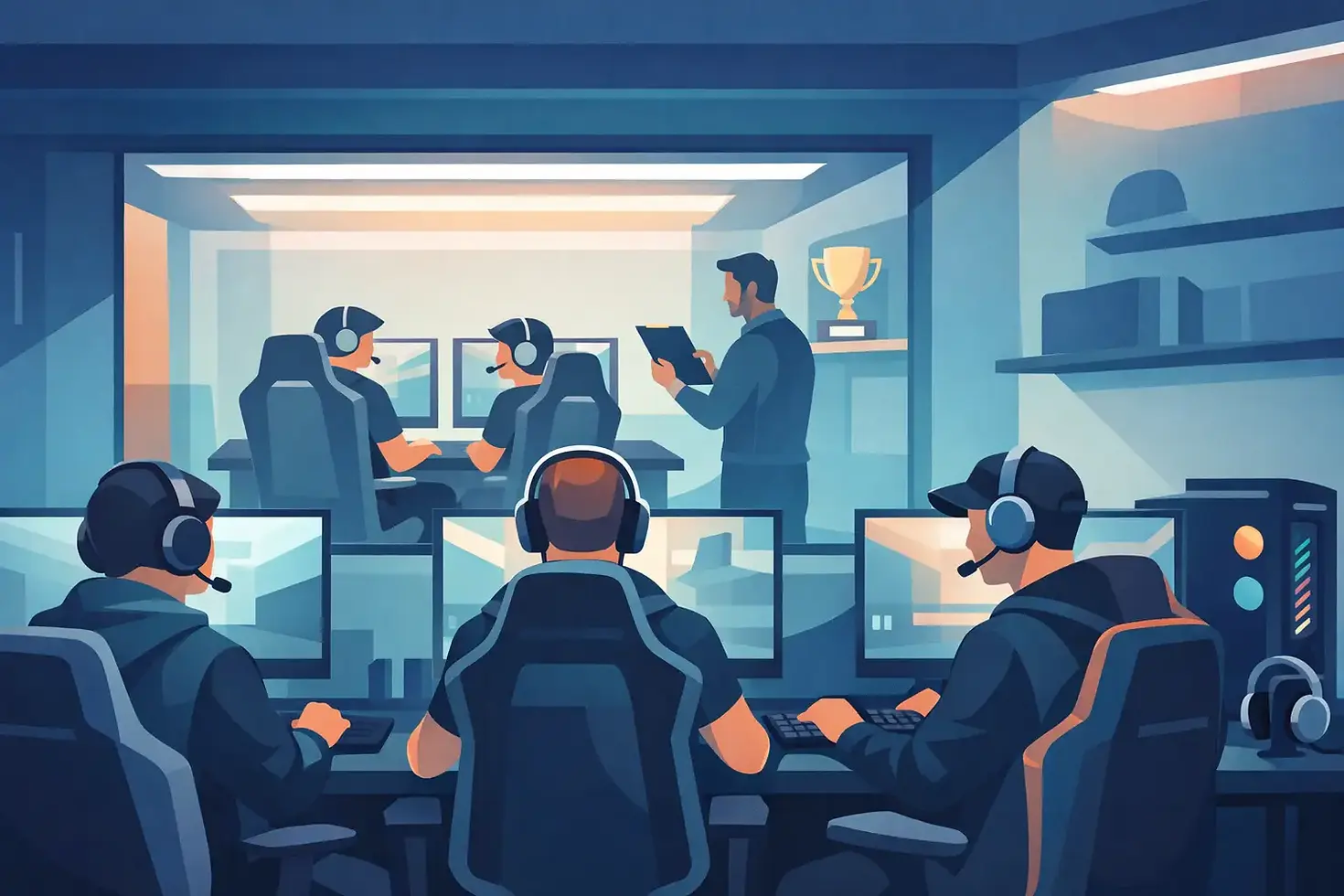
Esports Practice Rooms That Actually Work
One player is on dodgy Wi-Fi, another is playing with someone shouting in the background, and the team call is already half chaos before the first round starts. That is exactly why esports practice rooms matter. When a squad needs proper focus, clean communication and a setup that feels match-ready, practising in separate bedrooms just does not hit the same.
For casual teams, competitive friend groups and uni players trying to sharpen up, the right room can turn messy sessions into something that actually feels organised. Not stiff. Not corporate. Just better. More locked in, more social and far closer to the real pressure of live play.
Why esports practice rooms make such a difference
At home, gaming is easy. Proper team practice is not. Even if everyone has decent gear, there are always little issues that chip away at the session - lag spikes, distractions, late starts, weak comms or someone dropping off because their setup is not built for long sessions.
Esports practice rooms change the atmosphere straight away. The second everyone is in one dedicated space, the mission feels real. Players focus faster, warm up faster and usually communicate better because they are sharing the same environment. You are no longer trying to create team energy through a headset alone.
That shift matters more than people think. A private gaming room gives your group a clear boundary between casual play and proper prep. You can still have a laugh, of course, but there is a difference between queueing for fun and running scrims with purpose. The room helps everyone make that switch.
There is also the social side. Stronger teams are not only built on mechanics. They are built on trust, rhythm and reading each other properly. Being in the same space helps players pick up tone, body language and momentum in a way online-only sessions struggle to match.
What good esports practice rooms should include
Not every gaming venue is built for team improvement. Some are great for a quick session with mates but less useful if your goal is repeatable, focused practice. Good esports practice rooms need more than flashy lights and a few screens.
Privacy is the first big one. If your team is working on strats, practising comms or preparing for a local tournament, you do not want random noise, walk-through traffic or the feeling that people are constantly hovering nearby. A private room keeps the session yours.
Hardware quality matters too, but not always for the reason people expect. It is not about chasing the most expensive spec sheet in the galaxy. It is about consistency. If everyone is playing on responsive equipment in the same environment, your practice becomes more reliable. That makes it easier to spot real weaknesses instead of blaming gear.
Comfort also earns its place. Longer sessions need seating, space and a layout that does not feel cramped after an hour. If players are constantly adjusting, overheating or fighting for elbow room, focus starts drifting. The best rooms keep everyone settled so the energy stays on the game.
Then there is the obvious but often ignored factor - ease. If booking the room is simple, arrival is smooth and the session starts on time, your group spends more time actually playing. That sounds basic, but anyone who has tried to organise five or six people knows how quickly friction kills momentum.
Esports practice rooms for different kinds of players
The phrase can sound serious, but esports practice rooms are not only for elite teams with coaches and spreadsheets. They work for different skill levels - the key is using the space properly.
For friendship groups, the appeal is often the mix of competition and atmosphere. You get the thrill of playing together in a proper gaming-first space without the usual home setup chaos. If your idea of a great night is ranked matches, side challenges and a lot of shouting when someone clutches the final round, a private room makes the whole thing feel bigger.
For amateur teams, the benefit is structure. You can block out a session, agree on goals and treat the room like your temporary base of operations. Maybe that means two hours of scrims, maybe it means drilling callouts, maybe it is just finally getting all five players in one place and building chemistry. The point is that the room supports intent.
For students and uni societies, there is another bonus - convenience. Not everyone has a flat that can host a proper group session, and campus spaces are not always ideal for gaming. A dedicated venue gives you somewhere neutral, easy and far more exciting than trying to squeeze around a shared kitchen table.
When a private room beats practising at home
Home setups have their place. They are flexible, familiar and usually cheaper for solo grinding. If you are putting in individual reps, reviewing gameplay or playing a few evening matches, staying home is often perfectly fine.
But group sessions are different. The more people involved, the more home practice starts to show its weak points. Someone is delayed. Someone else has a microphone issue. Another player is distracted because family are in the next room. Before long, your carefully planned team session turns into half a warm-up and a lot of waiting around.
A private gaming venue solves many of those problems in one move. Everyone arrives with the same purpose. The space is built for play. The session feels like an event rather than an afterthought. That change in mindset is often the difference between a team saying they want to improve and actually doing something about it.
There is a trade-off, of course. Booking a room takes planning, and for some groups that means choosing quality over frequency. You might not meet in a venue every night, but one focused session a week can be more valuable than several scattered ones at home. It depends on your goals, your budget and how seriously your group wants to play.
How to get more from esports practice rooms
A great room helps, but it does not magically fix poor habits. If your team wants to make the most of esports practice rooms, go in with a rough plan.
Start with a clear objective. That could be improving communication, getting cleaner at set plays or just building consistency under pressure. You do not need a full coach-style document, but you do need some direction. Otherwise, it is easy to spend the whole booking bouncing between modes without really progressing.
Keep the first part of the session for warm-up and reset. Let everyone settle, test controls and get into rhythm. Once that is done, move into the matches or drills that matter most. The goal is not to remove the fun. It is to stop the fun from swallowing the whole session.
It also helps to leave a bit of room for review. If something clearly is not working, talk about it while everyone is still there. That face-to-face feedback is one of the best reasons to practise in person. Conversations are quicker, reactions are clearer and misunderstandings get sorted before they become habits.
And yes, make space for the social energy too. Some of the best team moments happen between games - the banter, the comeback speeches, the instant replay arguments. That chemistry is not wasted time. It is part of what makes a group want to come back and keep building.
The experience matters as much as the equipment
This is where many venues miss the mark. They focus only on the machines and forget the vibe. But for most groups, especially social gamers and emerging teams, the room needs to feel exciting as well as functional.
That means atmosphere counts. Lighting, layout and the sense that you have stepped into a dedicated gaming zone all add to the experience. A strong venue should feel different from home the second you walk in. More focused, more immersive, more like you have launched into something worth showing up for.
That is why private-room gaming has such pull. It is not just about borrowing better kit. It is about creating a setting where the whole squad can settle in, lock in and enjoy the session without interruption. One properly designed room can make an ordinary evening feel like a full mission.
For groups across the UK looking for that mix of competitive edge and social energy, Galaxy Rooms fits naturally into the picture. The private setup, gaming-first atmosphere and group booking model make it ideal for players who want more than a casual corner and a few loose consoles.
Choosing the right esports practice rooms for your squad
The best choice depends on what kind of team you are. If your group is highly competitive, prioritise privacy, consistent performance and enough room to communicate comfortably. If you are more social but still want a sharper setup, look for a venue that gives you premium kit without killing the fun.
Think about logistics as well. Can everyone get there easily? Does the booking length match how your team actually plays? Is the room better for short, intense sessions or longer all-evening grinds? These details matter because the best practice space is the one your group will actually use regularly.
Most of all, choose a place that makes people want to turn up. Motivation is half the battle with group gaming. If the room feels exciting, easy and built for your kind of play, people commit more readily and sessions become part of the routine rather than a maybe.
If your squad is tired of dropped calls, cramped setups and practice nights that never quite get off the ground, a dedicated room is not just a nice extra. It is a smarter way to play together, compete harder and make every session feel worthy of the countdown.
Comments